


What the New 50% U.S. Tariffs Mean for Canadian Families — A Practical Analysis

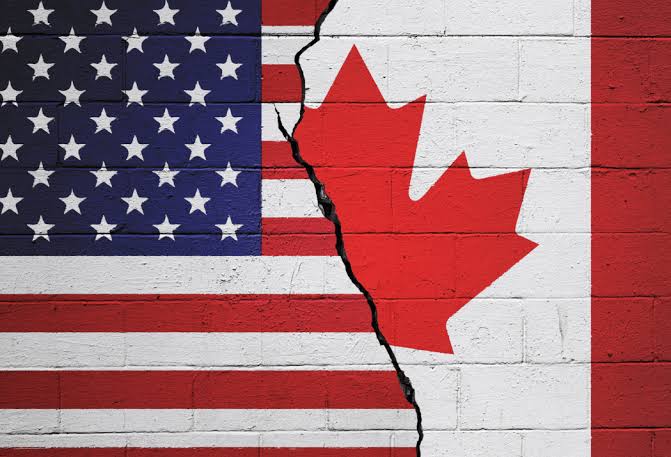
On Monday, 20 July, President Donald Trump signed three proclamations imposing additional 50% tariffs on a range of Canadian goods. The measures do not take effect immediately — they are scheduled to begin roughly 30 days from signing, in mid-to-late August. For Canadian households, that gap between announcement and implementation is the most useful thing about this story: there is a window to understand what is actually covered, what is exempt, and what it may mean for prices, jobs and the wider economy. This article sets out the facts as they stand, the arguments on both sides, and the practical questions families can reasonably ask.
What Was Actually Announced
The tariffs were issued under Section 338 of the Tariff Act of 1930 — an authority that, as trade lawyers at Covington and Burling have noted, has gone essentially unused for decades, with no public record of its application since 1949. The provision allows a president to impose duties of up to 50% on goods from a country determined to be discriminating against U.S. commerce.
Three separate proclamations each target a different set of Canadian imports. Reported categories include wine, hockey sticks, cement, dairy products, electrical equipment and machinery. Axios estimates the measures cover roughly $20 billion in annual Canadian exports to the United States. Notably, the tariffs apply to covered goods regardless of whether they would otherwise qualify for preferential treatment under the existing North American trade agreement.
Equally important is what is not covered. Energy products, potash, critical minerals and fish are exempt. These exemptions matter a great deal, because they spare several of Canada’s largest and most strategically significant export categories.
Key facts at a glance:
50% — additional tariff rate on covered goods
~$20 billion — estimated annual Canadian exports affected (Axios)
~30 days — delay before the measures take effect
Exempt: energy, potash, critical minerals, fish
Why the Administration Says It Acted
The stated rationale is retaliation and discrimination. A senior administration official, briefing reporters, framed the action as defensive rather than as the opening of a trade war, arguing that Canada — alongside China — was among the few countries to retaliate against earlier U.S. tariffs.
The specific grievances cited were: that all but two Canadian provinces and territories halted the purchase, distribution or retail of U.S. alcoholic beverages without applying similar restrictions to other countries; that Canada maintains tariff quotas on U.S. auto imports; and that Canada applied tariffs to American cheese while not applying equivalent measures to European Union cheese. In the autos proclamation, Trump pointed to a 25% Canadian tariff on U.S. motor vehicles not qualifying for preferential treatment, in place since April 2025.
U.S. Trade Representative Jamieson Greer said Canada, unlike other partners and allies, continues to retaliate against U.S. efforts to rebalance trade.
It is worth noting a point of context that critics raise: as PBS reported, the argument rests substantially on Canadian actions that were themselves responses to earlier U.S. tariffs — meaning the two sides describe the same sequence of events with different starting points.
How Canada Has Responded
Prime Minister Mark Carney’s response was measured. He called the tariffs a direct violation of the continental trade agreement, but stopped short of announcing retaliatory duties, saying instead that Canada is ready to engage intensively to resolve outstanding issues. He noted that Canada has put forward detailed proposals to settle the dispute and modernise the trade pact, and pledged that his government would take whatever measures are necessary to support Canadian workers, farmers, businesses and families.
Not all Canadian voices were as restrained. Ontario Premier Doug Ford argued publicly that if the tariffs proceed, Canada should respond tariff for tariff, dollar for dollar. The Canadian Chamber of Commerce described the move as a regrettable escalation and urged both governments to use the month before implementation to advance negotiations.
That divergence — federal caution versus provincial assertiveness — is itself a significant part of the story, because it will shape whether the next month produces a negotiated outcome or a further escalation.
What This Could Mean for Canadian Households
Here it is important to be careful and honest, because the effects on families are indirect and genuinely uncertain.
The first-order impact falls on exporters, not on Canadian shoppers. A U.S. tariff is paid by the importer bringing goods into the United States. The immediate pressure lands on Canadian producers in the affected sectors — wineries, dairy, cement, machinery and equipment manufacturers — who may face reduced U.S. demand or be asked to absorb part of the cost to stay competitive.
The channel to households runs through employment and regional economies. Where affected industries are concentrated, sustained tariffs can translate into reduced hours, slowed hiring or pressure on local suppliers. Communities built around a single export sector feel this more sharply than national averages suggest. This is the most plausible route by which the measures reach ordinary family finances.
Consumer prices in Canada are a more complicated question. These tariffs raise the cost of Canadian goods entering the U.S., which by itself does not raise prices in Canadian shops. Carney’s own statement made the point that the trade dispute has raised costs for families particularly in the United States — a reference to American consumers paying more for imported goods. Domestic Canadian price effects would depend on second-round factors: whether Canada eventually retaliates with its own tariffs on U.S. imports, how supply chains reroute, and how the currency moves. None of those are settled today.
The exemptions materially limit the damage. Because energy, potash, critical minerals and fish are excluded, the sectors representing some of Canada’s largest export values are outside the scope. Economists have observed that the trade arrangement between the two countries has been important in limiting the impact of tariffs on consumer prices. This is a meaningful constraint on how large the overall effect can be.
How the price mechanism actually works — and why the timing matters. A tariff announced today does not reach a household budget tomorrow. Goods already in transit, existing inventory, contracts signed at previous prices and the 30-day implementation delay all create lag. That lag has a practical upside: there is roughly a month before anything changes, and both governments have signalled that negotiations continue during it. It also means that if the dispute is resolved, some anticipated effects may never materialise.
The Broader Uncertainty
Several factors will determine whether this becomes a significant economic event or a negotiating episode.
The first is whether Canada retaliates. Carney has kept that option unstated; Ford has called for it openly. Retaliatory Canadian tariffs on U.S. goods would be the mechanism most likely to raise prices for Canadian consumers directly.
The second is the state of the continental trade agreement, which is already in an uncertain position after the U.S. declined to extend it. The tariffs’ application to goods that would otherwise be covered by that agreement adds further pressure to an unresolved framework.
The third is simply time. The measures take effect in roughly 30 days. Both the Canadian Chamber of Commerce and the Prime Minister have framed that period as an opportunity for negotiation.
There is also a legal dimension worth watching. The use of Section 338 — dormant for more than seventy years — is unusual, and untested authorities have historically attracted legal challenge.
Practical Questions for Canadian Families
None of the following changes the trade dispute, but each is a reasonable step within a household’s control.
Identify your exposure honestly. The relevant question is not “will prices rise” but “does my household income depend on an affected sector?” Someone working in wine production, dairy, cement or equipment manufacturing has a different exposure than someone in healthcare or public administration. Exposure is sectoral and regional, not universal.
Avoid acting on the announcement itself. Because there is a 30-day delay and active negotiation, making significant financial decisions today based on an outcome that may change is rarely wise. Stockpiling or large purchases in anticipation of uncertain price movements often costs more than it saves.
Watch the negotiation window, not the headlines. The most informative developments over the next month will be whether talks produce an agreement, whether Canada announces countermeasures, and whether the covered product lists are amended. Those are the signals that actually determine outcomes.
If you work in an affected sector, ask about it directly. Employers in exposed industries are assessing this now. Understanding your own workplace’s exposure and contingency planning is more useful than national forecasts.
Keep general financial resilience in view. The standard advice applies for any period of economic uncertainty: an emergency buffer, awareness of debt costs, and avoiding large new commitments while the picture is unsettled.
Keeping It in Proportion
The measures announced on 20 July are significant — a 50% rate is among the steepest this administration has applied to any country, and the use of a dormant statutory authority is a notable escalation. At the same time, the scope is bounded: three specific product lists rather than all Canadian trade, roughly $20 billion in coverage, with energy, potash, critical minerals and fish exempt. They have not taken effect, and both governments have described the coming weeks as a period for negotiation.
For Canadian families, the reasonable position is neither alarm nor dismissal. The most likely path to household impact runs through employment in specific sectors and regions rather than through a sudden jump in grocery prices. The next month will determine a great deal, and it is a month in which the situation could improve as easily as it could deteriorate. Households that fare best in periods like this are generally those that understand their specific exposure, avoid decisions driven by headlines, and wait for the facts to settle before acting on them.
Sources: Associated Press, CBC News, CNBC, CNN Business, Axios, PBS NewsHour, Forbes, Newsweek, Washington Times, Al Jazeera, and Fortune (20–21 July 2026); statements from Prime Minister Mark Carney, Ontario Premier Doug Ford, U.S. Trade Representative Jamieson Greer, and the Canadian Chamber of Commerce. Figures are accurate as of publication and subject to change as the situation develops. This article is for general information and does not constitute personalised financial advice.

What do you think?
Show comments / Leave a comment